


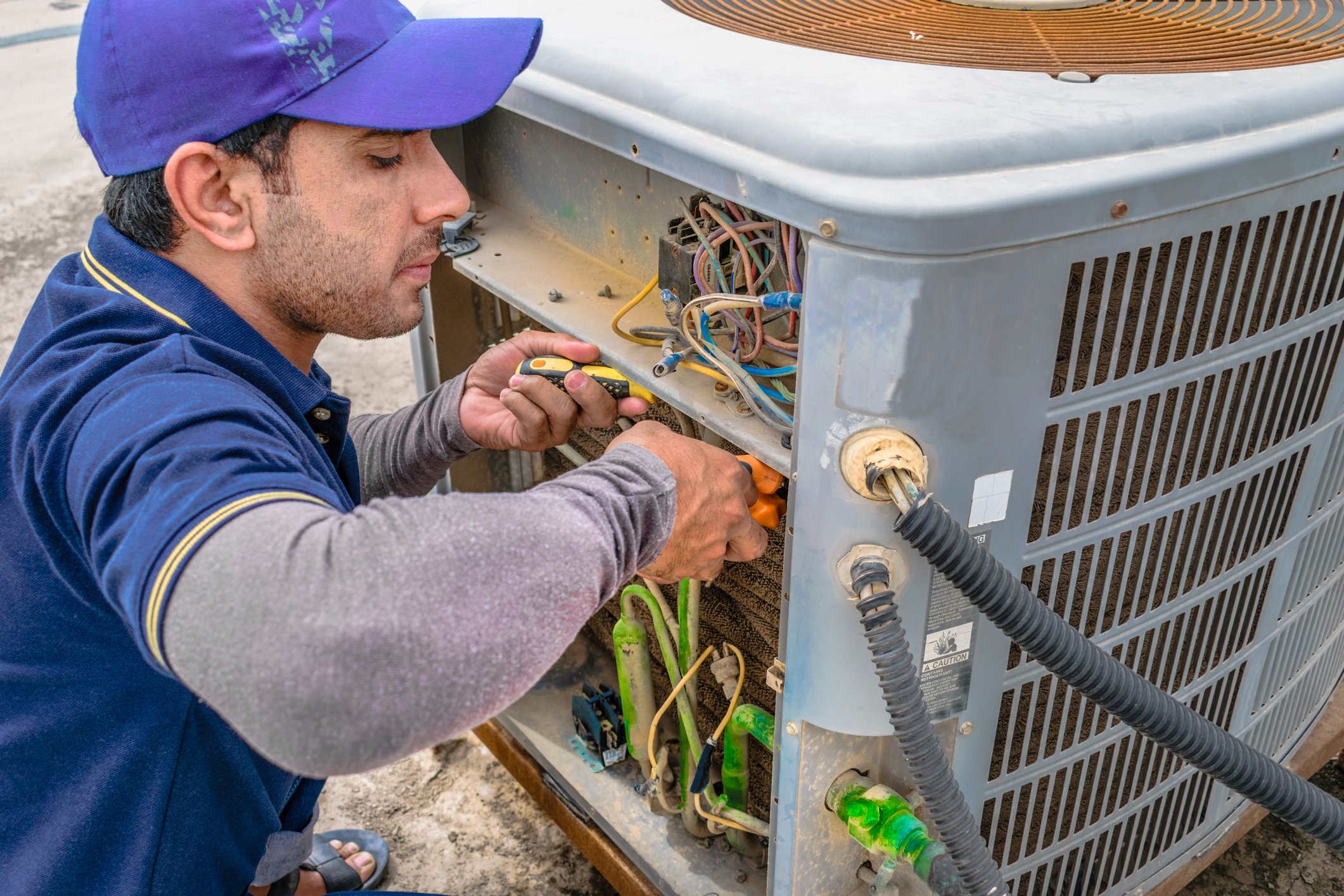
When your air conditioner stops working during a sweltering Texas summer, it creates immediate stress. You’re faced with urgent questions: What’s wrong? Can it be fixed? If it needs replacing, can I afford it? The good news is that air conditioners break all the time, and in most cases, they’re fixable. Even when replacement is necessary, the right HVAC company will help you with financing options to ease the burden.
This article will help you understand common AC problems, determine when repair makes sense versus replacement, and make an informed decision that’s right for your home and budget.
Diagnosing the Problem: What's Wrong With Your AC?
Before jumping to conclusions about repair or replacement, investigate the problem. Air conditioners communicate issues through specific symptoms, much like a car pulls to one side when it needs alignment. Ask yourself these diagnostic questions:
- Will the air conditioner turn on at all?
- Is the AC blowing air? If so, is it cool or warm?
- Is the unit leaking water?
- Does the AC fan appear to be working?
- Is the AC making strange noises?
- Is your circuit breaker tripping repeatedly?
Answering these questions gets you started down the right path toward a solution.
Common AC Issues and What They Mean
Understanding typical AC problems helps you communicate effectively with technicians and make informed decisions.
Poor Airflow
Restricted airflow can result from a dirty or clogged air filter, malfunctioning fan, or blocked ductwork. When airflow is limited, your unit can’t cool your home effectively, leading to increased energy bills and decreased comfort.
Refrigerant Leaks
Refrigerant is the substance that cools air in your system. Leaks result in decreased cooling capacity, higher energy bills, and potential environmental harm. Signs include low air output, hissing or bubbling sounds, frozen coils, and ice formation on the unit.
Dirty or Clogged Filters
Over time, air filters accumulate dust, dirt, and debris, restricting airflow and reducing efficiency. This causes higher energy bills, decreased comfort, poor indoor air quality, and can exacerbate allergies or respiratory issues.
Compressor Failure
The compressor circulates and compresses refrigerant to provide cool air. When it fails, you get decreased cooling capacity or no cooling at all. Warning signs include strange noises, warm air from vents, and unexpectedly high energy bills.
Electrical Issues
Power surges, short circuits, or component damage can cause abrupt failures. Problems with capacitors, relays, or wiring prevent your system from starting or operating properly.
Thermostat Problems
A malfunctioning thermostat can’t properly communicate with your AC unit, causing inefficient operation or preventing the system from running at all.
Low-Cost AC Repairs Worth Considering
Many AC problems have straightforward, affordable solutions. Before assuming you need expensive repairs or replacement, consider these cost-effective fixes.
Cleaning or Replacing the Air Filter
This is the simplest and most impactful repair. Dirty filters restrict airflow and force your unit to work harder, decreasing efficiency and increasing energy bills. Regular filter changes (every 1-3 months) can prevent many larger problems.
Thermostat Replacement
A faulty thermostat causes inefficient operation or complete system failure. Replacing it is relatively inexpensive and can dramatically improve temperature control.
Cleaning the Evaporator Coil
Dirty or clogged evaporator coils restrict airflow and force your unit to work harder. Professional coil cleaning is a low-cost repair that improves system efficiency.
Refrigerant Leak Repair
If your AC is low on refrigerant due to a leak, repairing the leak and recharging the system can restore proper function and avoid more serious damage from the unit running low on refrigerant.
Fan Motor Replacement
When the fan motor fails, your unit works harder and loses efficiency. Replacing a fan motor is more affordable than replacing the entire system.
Capacitor Replacement
The capacitor starts your AC and keeps it running. If your AC won’t turn on, a dead capacitor could be the culprit. Capacitors can be recharged or replaced relatively inexpensively.
Unclogging the Condensate Line
When the condensate drain becomes clogged, your AC shuts off to prevent short circuits. Once unclogged, normal function typically resumes.
Replacing Blown Fuses
A blown thermostat fuse prevents communication between your thermostat and AC unit. Simple fuse replacement solves this problem.
While these repairs can be effective and affordable, they’re not always the best long-term solution. Some issues indicate larger systemic problems where replacement makes more financial sense.
When AC Replacement Makes More Sense
Certain indicators suggest that replacement, rather than continued repairs, is the smarter investment.
Age of the Unit
Air conditioners typically last 10-15 years with proper maintenance. If your unit is approaching or past this lifespan, replacement is often more cost-effective than continued repairs. Older units are significantly less energy-efficient than modern models, meaning higher operating costs even when functioning properly.
Uses R-22 Refrigerant
As of January 1, 2020, the EPA banned the production and import of R-22 (hydrochlorofluorocarbon-22) in the United States to protect the ozone layer. While existing R-22 systems can still be used and serviced with recycled or stockpiled supplies, no new R-22 is being produced. Costs for R-22 are significantly higher, encouraging a transition to ozone-friendly alternatives. If your system uses R-22, replacement with a modern system using environmentally friendly refrigerant makes long-term financial and environmental sense.
Frequency of Repairs
If you’re calling for repairs every few months, you’re wasting money that could go toward a new, reliable system. Frequent repairs also indicate larger, systemic issues that won’t be resolved with patchwork fixes.
High Repair Costs
Lorem ipsum dolor sit amet, consectetur adipiscing elit. Ut elit tellus, luctus nec ullamcorper mattis, pulvinar dapibus leo.
Rising Energy Bills
Older, failing systems work harder to achieve the same cooling, driving up energy costs. If your bills have increased significantly without explanation, your AC may be operating inefficiently.
Inability to Cool Adequately
If your AC can’t maintain comfortable temperatures throughout your home despite repairs, it may be undersized, failing, or past its useful life.
Making the Decision: Repair or Replace?
AC repair makes sense when:
- The unit is relatively new (under 10 years old)
- The repair is minor and low-cost
- The unit has been well-maintained and has significant life remaining
- You plan to move soon and need a temporary solution
AC replacement makes sense when:
- The unit is old and approaching or past its expected lifespan
- Repair costs are high (approaching 50% of replacement cost)
- The unit requires frequent repairs
- Energy bills have increased significantly
- The unit uses R-22 refrigerant
- You’re planning to stay in your home long-term
There’s no one-size-fits-all answer. The right choice depends on your unit’s age and condition, cost-effectiveness of repairs versus replacement, your long-term plans, and your budget.

Important Questions to Ask Your HVAC Technician
Before making any decisions, have an honest conversation with a trusted HVAC professional. Here are essential questions to ask:
Should I Repair or Replace?
Get a professional assessment of your specific situation. A qualified technician will provide an honest evaluation based on the unit’s condition, repair costs, and your best interests.
What Are the Benefits of a New System?
Modern air conditioners offer significant advantages:
- Improved energy efficiency reduces monthly utility bills
- Better indoor air quality with advanced filtration
- Enhanced humidity control improves comfort
- Quieter operation with updated technology
- Smart thermostat compatibility for better control
- Fewer repairs with new, reliable equipment
- Increased home value with updated systems
What's Involved in Installation?
Understanding the installation process helps you plan appropriately. Professional installation includes:
- Removing the old unit
- Calculating your home’s cooling load to determine proper sizing
- Presenting appropriate, affordable options
- Installing refrigerant coils, lines, condenser, and components
- Updating or installing necessary ductwork
- Filling refrigerant coils
- Testing the complete system
Quality installation takes time but ensures your system operates efficiently for years.
What Financing Options Are Available?
Air conditioning services can be expensive, and paying upfront isn’t feasible for most homeowners. Ask about financing options as reputable HVAC companies often offer payment plans to make necessary repairs or replacements accessible without financial strain.
At Dial One Johnson, we partner with financing providers so cost isn’t a barrier to comfort. We believe you shouldn’t have to choose between living uncomfortably and overextending yourself financially.
Extending Your AC's Lifespan
Replace Air Filters Regularly
Change filters every 1-3 months. This simple task prevents numerous problems and extends system life significantly.
Schedule Professional Maintenance
Have your system serviced at least twice yearly, ideally before cooling season and again before winter. Regular maintenance catches small issues before they become major failures.
Use a Programmable Thermostat
Smart thermostats reduce unnecessary runtime, decreasing wear and improve efficiency.
Reduce Heat Inside Your Home
Help your AC by:
- Using high heat-producing appliances during cooler morning and evening hours
- Blocking sun with quality blinds or thermal curtains during peak heat
- Improving home insulation to retain cool air longer
- Ensuring your outdoor unit has shade from direct sunlight
Maintain Proper Clearance
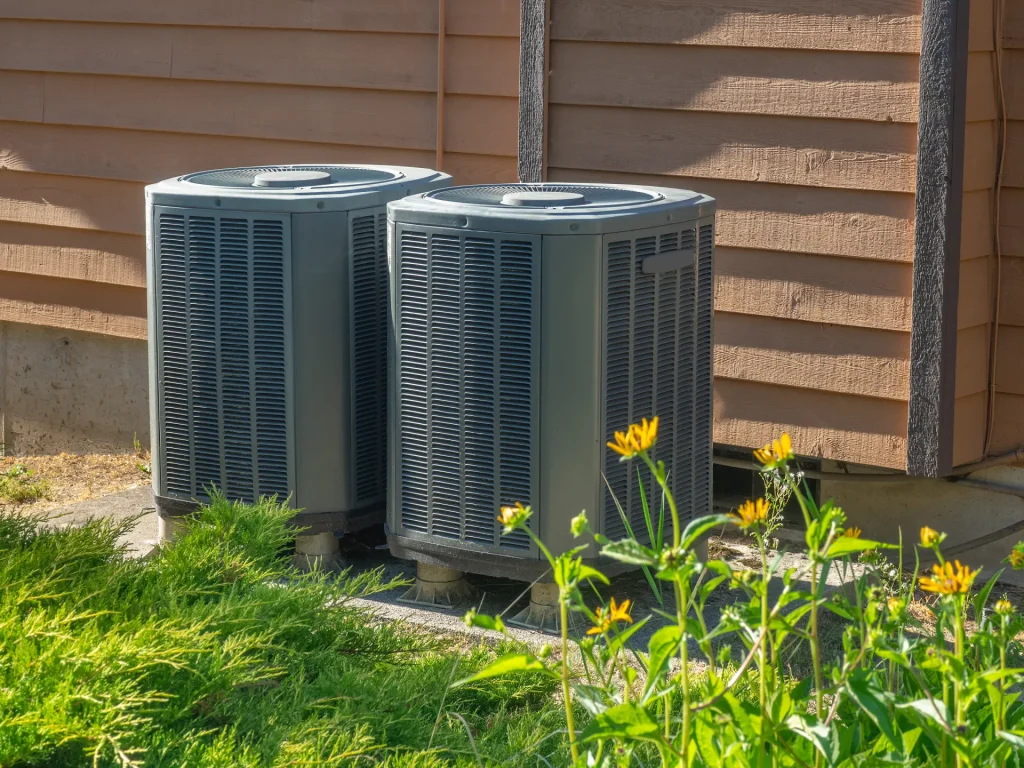
Keep at least two feet of clearance around your outdoor unit. Trim vegetation, remove debris, and ensure unrestricted airflow.
Trust Dial One Johnson for Expert Guidance
At Dial One Johnson Plumbing, Cooling & Heating, we understand how stressful AC problems can be. Our family-owned business has served the Dallas area for decades, and we’re committed to providing honest assessments, quality service, and fair prices.
We’ll never pressure you into unnecessary replacements, but we’ll also be straightforward when replacement makes better financial sense than continued repairs. Our certified technicians have the expertise to accurately diagnose problems, perform reliable repairs, and install new systems that keep your home comfortable for years to come.
Whether you need emergency repairs, routine maintenance, or a complete system replacement, we’re here to help.
Don’t let AC problems leave you uncomfortable. Contact Dial One Johnson Plumbing, Cooling & Heating at 972-291-0740 or reach out online to schedule service today.